For Vehicles
Tow-Bar Mounted Bike Racks
Modular 1-4 bike racks manufactured in Australia for cars, SUVs, 4WDs and utes.


Caravan Bike Racks · Tow Ball Weight
Last updated: 3 July 2026
A customer came to us because his existing drawbar rack pushed his ball weight over his legal tow ball limit. He needed to shave at least 15kg off to be compliant. His options were limited. Leave bikes behind, or find a rack that could carry the same load with less impact on the tow ball.
We replaced his rack with the iSi system and took 19kg off his tow ball, with the same four bikes (56.5kg combined) on the same caravan. Compliant. With margin to spare. All four bikes loaded.


Tow ball reduction
19kg
Less tow ball weight than a competitor with the same four bikes on the same caravan.
Closer to the axle
383mm
Shorter lever arm. Less force translated through to the tow ball.
Lower load height
200mm
Lower centre of mass. Easier to load bikes. More stable on the road.
01 · Side-by-side
Both racks were tested on the same caravan, carrying the same four bikes (56.5kg combined). The difference isn't in what they carry. It's in where the load sits.
Other rack
All four bikes lined up at the same height, hanging well forward of the van. Higher centre of mass, longer lever arm, and harder access to individual bikes.
iSi system
Each bike at a different height, sitting close to the van body. Easy access to every bike, lower centre of mass, and 19kg less on your tow ball.
02 · The physics
Tow ball weight, also called tow ball mass (TBM), is one of the most misunderstood numbers in caravanning. The weight of the rack and bikes matters. But it's only half the story. Where that weight sits, and how far it sits from your caravan axle, decides how much of it actually lands on the tow ball.
Hold a 5kg dumbbell against your chest. Now hold it out at arm's length. The weight hasn't changed. The load on your shoulder has multiplied. That's leverage. The same physics is at play between a bike rack and your tow ball.
A rack mounted 400mm forward of the van puts the bikes at the end of a long lever arm. The further out they sit, the more downward force they apply to the tow ball, well beyond their actual mass. The iSi system mounts within 25mm of the van front. Bikes sit tight to the body. Close to the axle. Short lever arm. Less leverage. Less load on the tow ball, without changing the rack weight at all.

03 · Bike rack comparison
A direct comparison of the two systems carrying the same four bikes. Static rack weight, ball weight impact, positioning and towing dynamics.
| Other rack | iSi system | |
|---|---|---|
| Static rack weight | 40.50kg (excl. drawbar mount) | 39.82kg (incl. drawbar mount) |
| Distance from van front | 408mm | 25mm (383mm closer) |
| First bike height | 870mm | 670mm (200mm lower) |
| Tow ball impact (4 bikes) | Higher | 19kg less |
| Centre of mass | High and forward of van | Low and back toward the axle |
| Towing dynamics | Long lever arm increases sway potential | Compact load improves stability |
Comparison based on side-by-side testing of both racks on the same caravan, carrying the same four bikes (56.5kg combined). Static rack weight figures are manufacturer specifications. Tow ball weight reduction is a measured outcome of rack positioning and centre-of-mass placement, not a difference in static rack mass. Results may vary depending on caravan, drawbar configuration and existing setup.
04 · Towing stability
Tow ball weight is only half the story. The other half is what happens to your caravan's centre of mass when bikes get loaded onto it. A rack that sits high and forward of the van raises that centre of mass and shifts it away from the caravan axle. Both work in the same direction. They reduce the stability margin your rig has when something happens at speed.
You won't notice it on a flat highway. At 90km/h in clean air, a poorly positioned rack feels identical to a well positioned one. The caravan tracks straight. The handling feels normal. Nothing tells you the rig is closer to the edge than it should be.
Then a crosswind hits. A truck overtakes you. You hit a long descent at 110km/h. The caravan starts to yaw, and a rig that was sitting on a comfortable stability margin is suddenly past it. The physics is well established, and it confirms what experienced caravanners already know. Once sway builds beyond a critical point, it stops self-correcting and starts amplifying. By the time you feel it through the steering wheel, you're correcting a problem that's already running ahead of you.
A rack that places the bikes lower and closer to the caravan axle leaves more margin in the system. Lower centre of mass means less leverage when the caravan starts to yaw. Closer to the axle means less mass acting through the long lever arm that drives sway in the first place. It's the kind of stability you can't feel directly. It's just the absence of a problem.
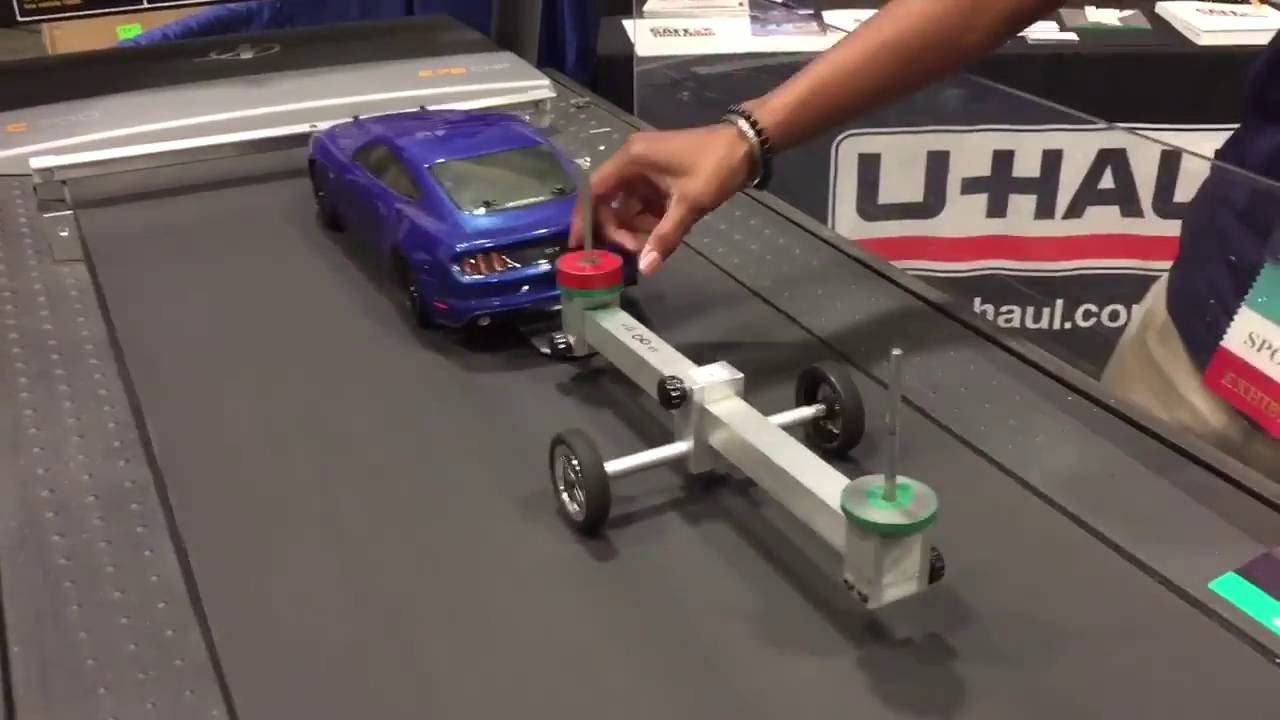
Watch · Tow ball weight in action
See how rack positioning translates into real tow ball load.
The hidden risk
The danger isn't that a poorly positioned rack feels unstable on a normal day. It's that it feels completely fine right up until the moment it doesn't. Centre of mass and tow ball positioning don't show themselves on the highway in calm conditions. They show themselves at speed in a crosswind, on a descent, or when a B-double passes you on a country road. By then, the time to fix it has passed.
05 · Engineered, not assembled
The 19kg result wasn't an accident. It happened because the system was configured to mount tight to that customer's specific van, instead of forced into a generic position. No two caravans are the same. Drawbar lengths vary. Tool boxes sit at different heights. Jockey wheels mount in different positions. Expander caravans have bed end articulation that needs clearance. Gas bottle locations differ. Spare wheel mounts get in the way.
An off-the-shelf bike rack will always compromise on at least one of those measurements. The iSi system is manufactured from hundreds of modular components and configured by our team to suit your specific caravan geometry. Post heights, beam lengths, mount types, pivot configurations and drawbar mount specifications are all selected for your van. That's the only way you get a result like 19kg off the tow ball, instead of a one-size-fits-most rack with a generic adapter and a long lever arm.
You can read the full breakdown of how the system is engineered on our caravan bike racks page, including capacities, materials, and how each system is configured for your van.
Drawbar geometry
Mount specifications selected to clear tool box openings and gas bottle locations specific to your van.
Hardware clearance
Drawbar mounts engineered around your jockey wheel position and hand brake operation.
Expander caravans
Pivot configurations that allow front bed deployment without unloading the bikes.
Bike configuration
Post heights and beam length selected for your bike count, including e-bikes up to 32kg per bike.
Tow vehicle
System height configured to clear the rear of your tow vehicle when articulating into camp.
Weight distribution
Compatible with most weight distribution hitches, stone guards, storage boxes and existing drawbar fitments.
06 · Why tow ball weight matters
Your maximum ball weight is set by the lowest-rated component in your rig: the caravan coupling, the tow bar, the tow ball, and your vehicle manufacturer's specified maximum ball load. As a guide, most vans tow best with 8 to 10% of ATM on the ball, but the plated ratings are what compliance is measured against. A bike rack mounted on the A-frame and four bikes can add 40kg or more directly to that number, especially when mounted on a long lever arm forward of the van.
Exceed your tow ball limit and you're outside compliance. You're also increasing the risk of trailer sway, uneven tyre wear, and reduced steering feel on your tow vehicle. It's the kind of thing that's invisible on flat highway, and very obvious the first time you hit a long descent, a crosswind, or a corrugated dirt road.
The iSi system is engineered so that its position does the work, keeping tow ball load in check without forcing you to choose between bikes and compliance. If you're not sure where your current setup sits, get in touch with our team.
Frequently asked
A rack plus four bikes can add 40kg or more to your ball weight. If the rack hangs forward of the van on a long lever arm, the measured tow ball load can exceed the actual mass of the rack and bikes. Positioning matters as much as weight.
There's no single legislated percentage. Your limit is the lowest of: your caravan coupling rating, your tow bar and tow ball rating, and your vehicle manufacturer's maximum ball load. As a guideline, ball weight typically sits between 8 to 10% of ATM. Check your compliance plates and owner's manuals.
Yes, provided the combined ball weight stays within your ratings and the rack clears your jockey wheel, gas bottles and tool box. That's why iSi racks are configured to your specific drawbar rather than sold off the shelf.
They can contribute if mounted high and forward. That raises the centre of mass and lengthens the lever arm acting on the tow ball. A rack that sits low and tight to the van body preserves your stability margin.
Use a ball weight scale under the coupling, or a weighbridge, with the van packed as you'd tow it, bikes on. Measure before and after loading bikes to see exactly what your rack adds.
Ready to configure
Every iSi caravan bike rack is configured specifically for your drawbar, your bikes, and the way you tour. Build yours in minutes, or speak to our sales team.